
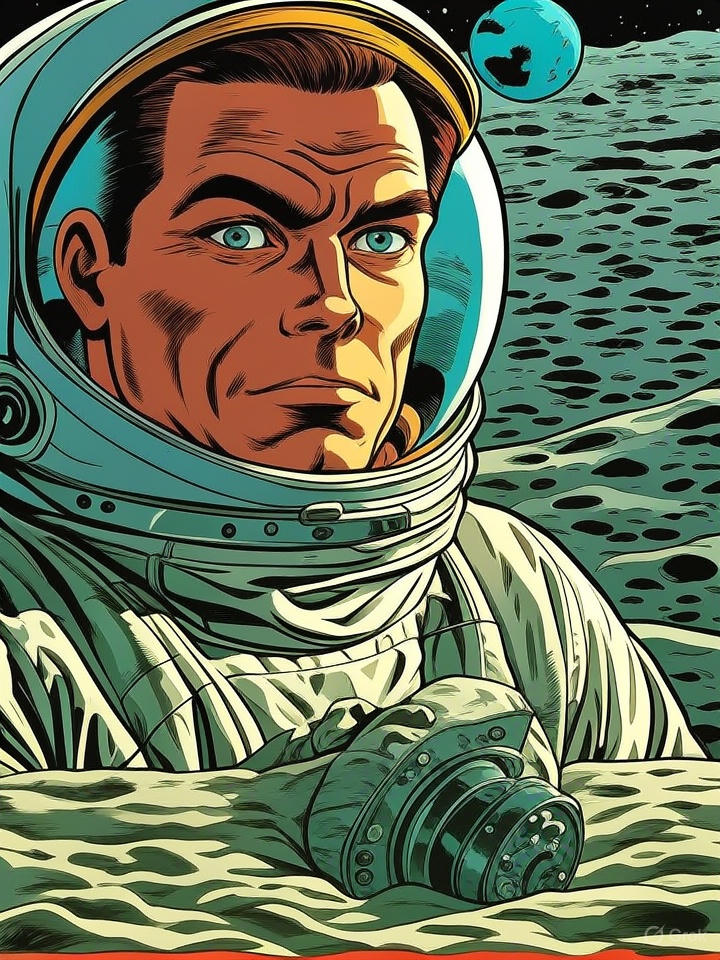
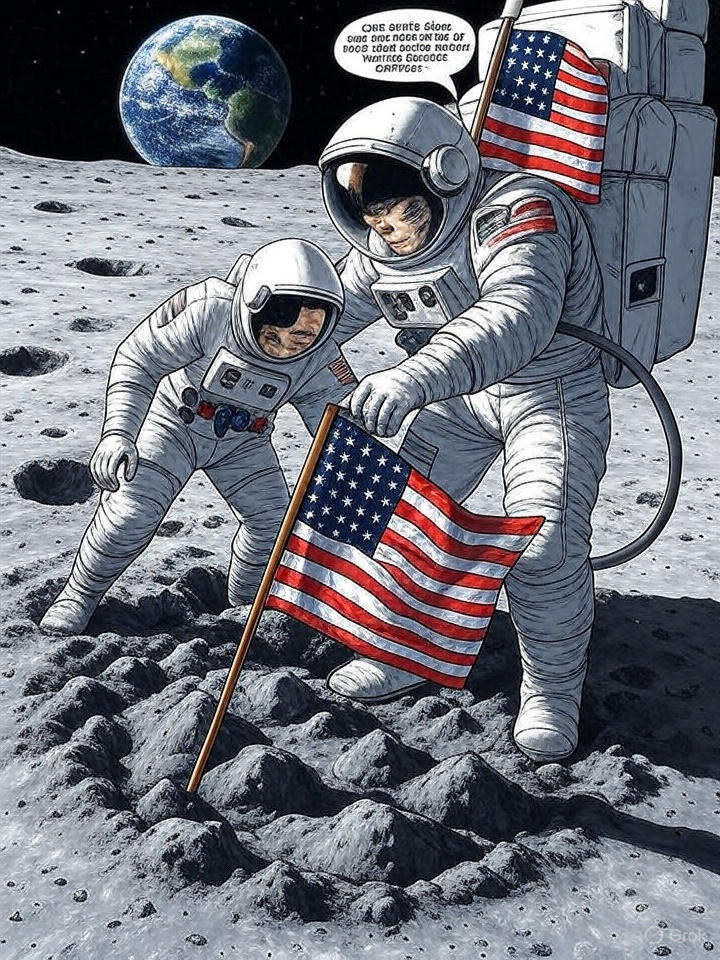
The Moon landing of 1969 stands as the giant leap that changed human history. On July 20, the Apollo 11 mission fulfilled humanity’s dream of walking on the Moon. Neil Armstrong’s historic words — “That’s one small step for man, one giant leap for mankind” — echoed across the globe, marking a turning point not just in space exploration, but in what humans believed was possible.
The Race to Space
The Moon landing was the pinnacle of the Cold War space race between the United States and the Soviet Union. After the Soviets launched Sputnik in 1957 and sent Yuri Gagarin into orbit in 1961, the U.S. was determined to lead in space.
In response, President John F. Kennedy boldly declared that America would land a man on the Moon before the decade’s end. With Apollo 11, that vision became reality — and delivered the giant leap that changed human history.
Meet the Crew of Apollo 11
- Neil Armstrong – Mission Commander, First Man to Walk on the Moon
Neil Armstrong was the courageous leader of the Apollo 11 mission and the first human to set foot on the Moon. Known for his calm demeanor and exceptional piloting skills, Armstrong took that historic “small step” on July 20, 1969, famously stating,
That’s one small step for man, one giant leap for mankind.”Before Apollo 11, Armstrong was a naval aviator, test pilot, and aerospace engineer. His precise and steady leadership was crucial to the mission’s success, especially during the challenging lunar landing when he manually piloted the lunar module to a safe touchdown on the Moon’s surface. - Buzz Aldrin – Lunar Module Pilot, Second Man on the Moon
Buzz Aldrin followed Armstrong onto the lunar surface, becoming the second person to walk on the Moon. An experienced fighter pilot and engineer, Aldrin played a key role in operating the lunar module Eagle during descent and surface operations. On the Moon, Aldrin conducted scientific experiments, took iconic photographs, and helped collect valuable rock samples. Beyond Apollo 11, Aldrin has been a passionate advocate for space exploration, inspiring generations to look to the stars. - Michael Collins – Command Module Pilot, Orbited the Moon
Michael Collins piloted the command module Columbia, which orbited the Moon while Armstrong and Aldrin explored the surface. Though he did not walk on the Moon himself, Collins’ role was vital—he maintained the spacecraft’s systems, ensured communications, and prepared for the crew’s safe return to Earth. Known for his thoughtful reflections on solitude in space, Collins often described his orbit as a unique and profound experience, serving as the guardian of the mission’s success from above.
The Moment That Stopped the World
Over 600 million people watched the Moon landing live — the largest global broadcast of its time. For a brief moment, borders and politics faded, and the world was united in awe.
The astronauts spent 21 hours on the Moon, collecting rock samples, conducting experiments, and planting the American flag — all actions that symbolized a shared human victory.